

21 Sep The Multiplier Effect: How Combining Brand Equity with Performance Marketing Boosts ROI by +90%
Executive Summary: Breaking the Performance Marketing Plateau
Proving marketing ROI and justifying annual budgets remain two of the biggest operational hurdles for modern marketing leadership. WARC’s research report, The Multiplier Effect, offers definitive, data-backed solutions to both issues.
Key Takeaways at a Glance
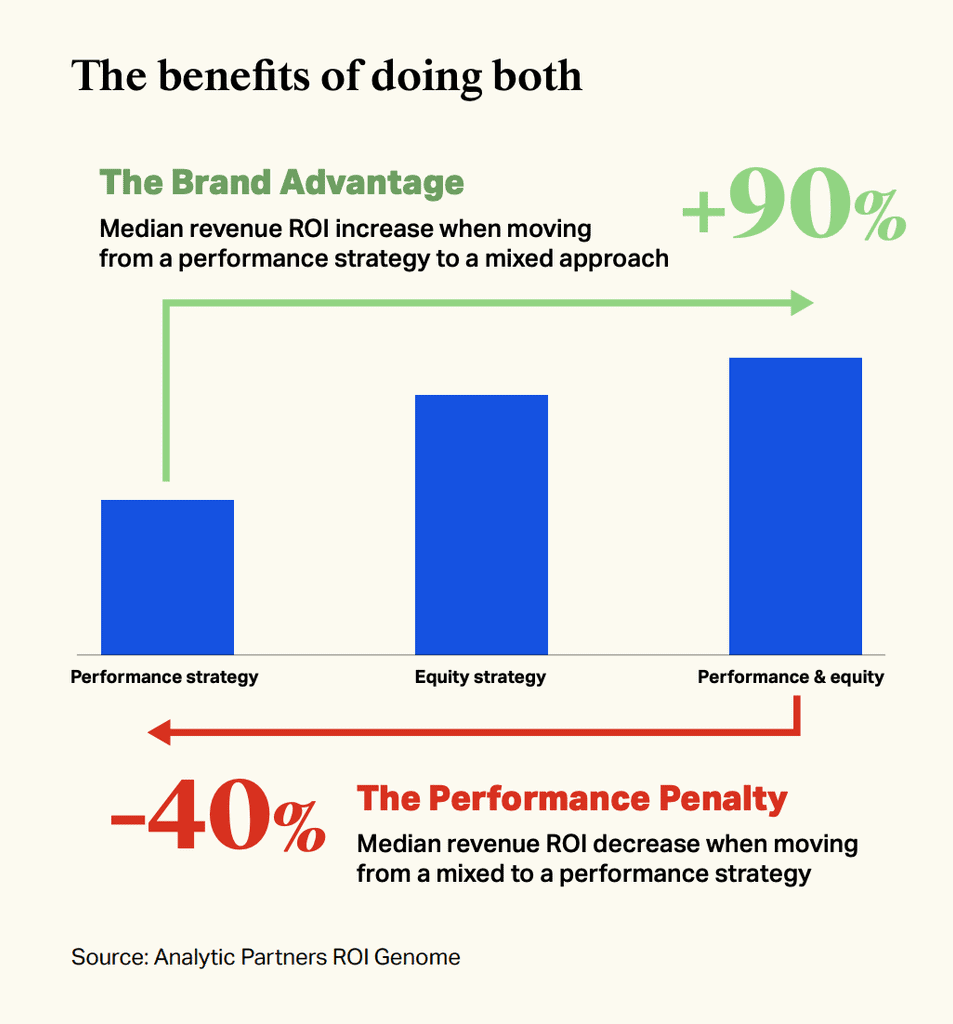
- +90% ROI Increase: Brands transitioning from lower-funnel, ROAS-optimized performance tactics to a balanced model (Brand Equity $\times$ Performance Marketing) increased total marketing ROI by 90%.
- The Cost of Cutting Brand: Brands that eliminated brand equity building from their strategy experienced a 40% drop in ROI.
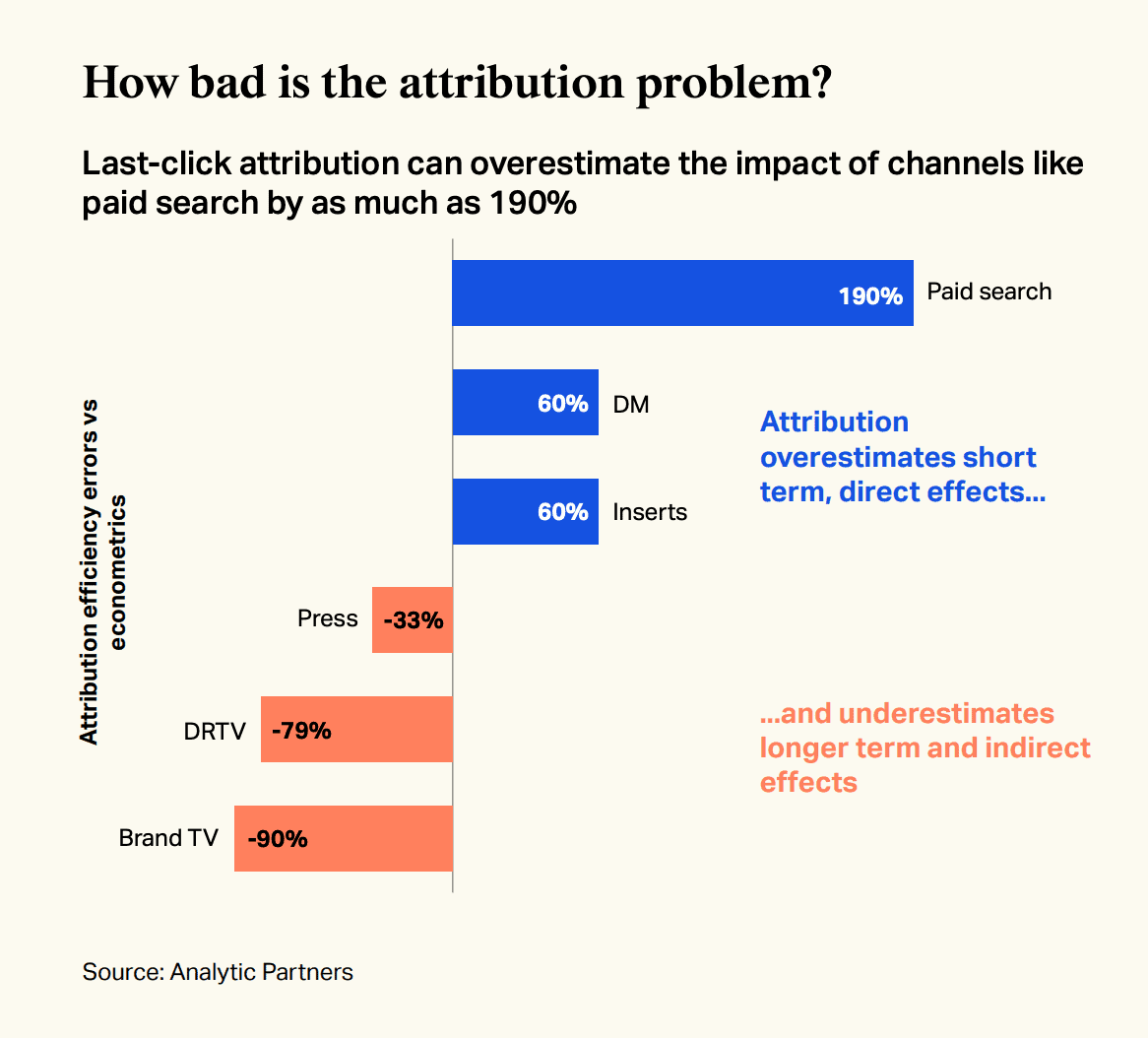
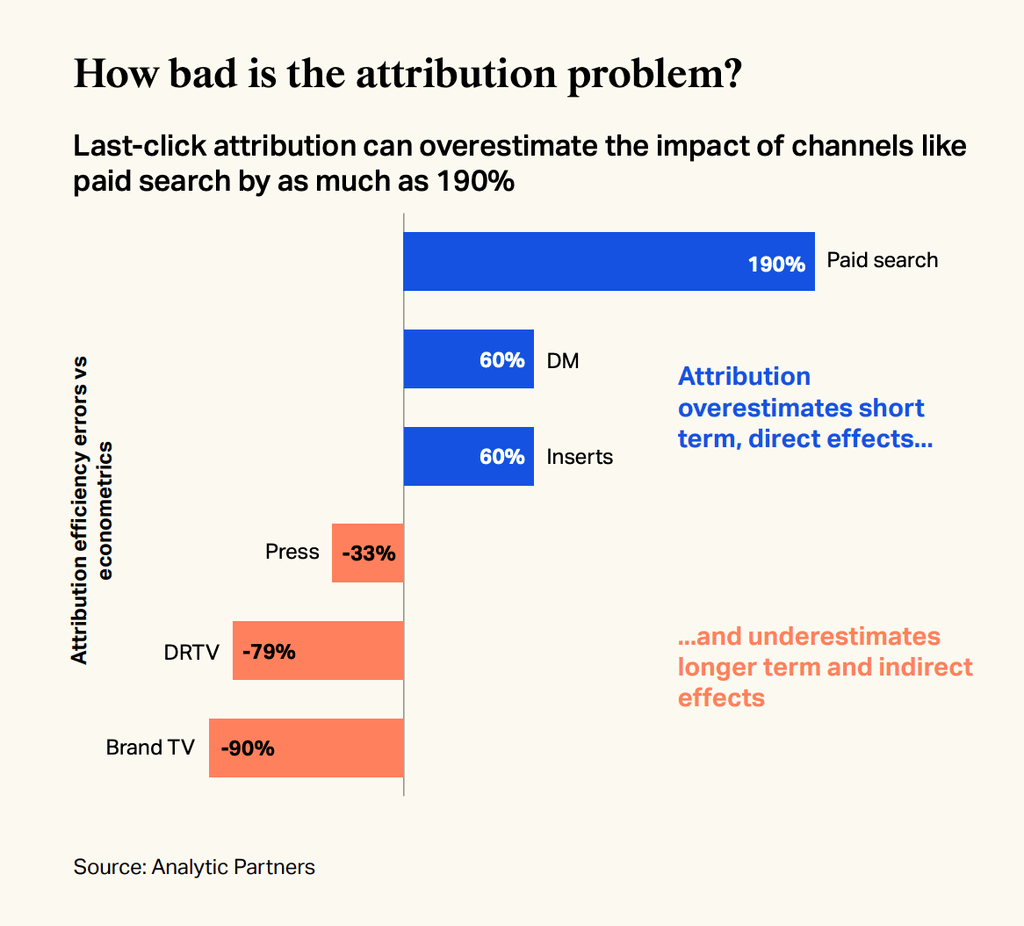
- The Last-Click Attribution Fallacy: Up to 60% of search ad conversions are driven by non-performance factors, including upper-funnel media exposure, brand equity, seasonality, and organic category demand.
The Flaw in “Last-Click” Attribution: The Digital Silo Problem
The proliferation of digital advertising created hyper-specialized channel teams—Paid Search, Content Marketing, Retail Media, and Co-Op. To secure budget allocation each year, individual channel teams frequently rely on last-click Return on Ad Spend (ROAS) models.
This structural setup creates a critical flaw: Last-click metrics over-index on channels closest to the point of sale, ignoring the channels that created the demand.
The Search Ad Misconception
Search ads operate like storefront signage—they show ready shoppers where to go. Attributing 100% of a sale to a search ad (or a Meta retargeting banner) is equivalent to giving a physical storefront sign full credit for every item sold inside the store.
WARC’s study breaks down the true driver breakdown behind search ad interactions:
- 30% of search ad interactions are directly driven by upper- and mid-funnel media (TV, Out-of-Home, Radio, PR).
- 30% to 60% of search ad interactions are driven by baseline brand equity, seasonal trends, and past purchase history.
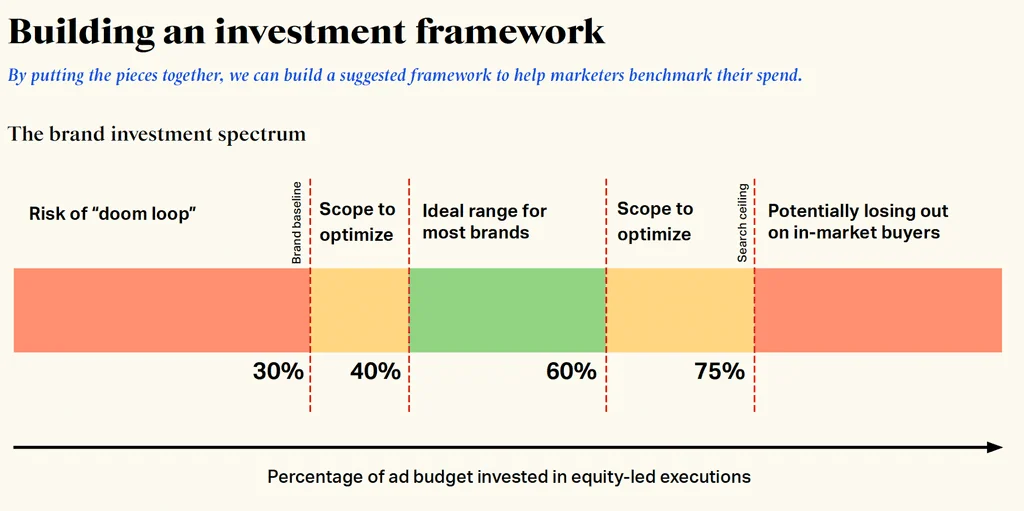
Over-relying on short-term attribution creates a “Doom Loop”: budgets continuously migrate toward easy-to-measure capture-demand tactics, starving top-of-funnel reach and failing to build the future demand required for sustainable business growth.
What Is “The Multiplier Effect” in Marketing?
The Multiplier Effect occurs when an organization aligns broad-reach brand campaigns alongside targeted performance channels. Instead of treating brand equity and performance as separate budget silos (Brand + Performance), treating them as unified, interdependent growth levers (Brand $\times$ Performance) creates exponential revenue lift.
Effectiveness reaches its highest level when advertising fulfills two key objectives:
- Capturing immediate demand among in-market buyers today.
- Building future demand among out-of-market buyers for tomorrow.
6 Steps to Execute the Multiplier Strategy
To transition from short-term reliance to a high-ROI multiplier model, adjust your creative, media, and measurement strategies as follows:
- Build Creative Platforms (Not One-Off Campaigns): Develop long-term creative platforms capable of scaling across all channels. Ensure the core narrative can flex between emotional brand building and tactical conversion messaging.
- Commit for the Long Term: A brand platform requires duration to build memory structures. Maintain a balanced KPI dashboard that evaluates both immediate conversion velocity and long-term brand health over 12 to 36 months.
- Embed Distinctive Brand Assets: Systematically deploy distinctive assets—logos, sonic signatures, characters, brand colors, and taglines—across all ad formats. Consistent visual and auditory cues increase processing efficiency and drive higher ad recall.
- Inject Brand Thinking into Performance Creative: Move beyond generic discount banners (e.g., “40% Off Today”). Incorporate brand-equity messaging and visual style directly into conversion-focused assets.
- Optimize Media Allocations: Aim for a balanced investment baseline—such as a 50/50 split between reach-focused emotional equity campaigns and direct-response performance channels.
- Modernize Your Measurement Stack: Replace single-touch attribution models with unified frameworks like Marketing Mix Modeling (MMM) and multi-cell incrementality testing. A modern measurement stack accounts for external variables (pricing, macroeconomics, distribution) and presents reliable commercial outcomes to CFOs.
FAQ: Brand Equity $\times$ Performance Marketing
Why does cutting brand equity budget reduce performance ROI?
Eliminating brand marketing shrinks the overall pool of prospective buyers over time. As brand recognition fades, fewer consumers search for the brand directly, leading to higher customer acquisition costs (CAC) and declining conversion rates in performance channels.
How does Generative Engine Optimization (GEO) relate to brand equity?
AI search platforms and LLMs synthesize broad digital footprints to answer user prompts. Brands with strong top-of-funnel equity, widespread PR coverage, and established organic mindshare are significantly more likely to be cited as top recommendations in AI-generated answers.
(Source: WARC’s “The Multiplier Effect” Report)