

07 Apr Is Your Brand Top-of-Mind or Out-of-Mind?
A consumer’s memory, not our competitors, is the single biggest threat to the our brand’s advertising.
Below, you’ll find 4 ways to apply memory science to your next campaign to improve top-of-mind awareness, build stronger ad recall, and create more sales opportunities.
First, The Forgetting Curve
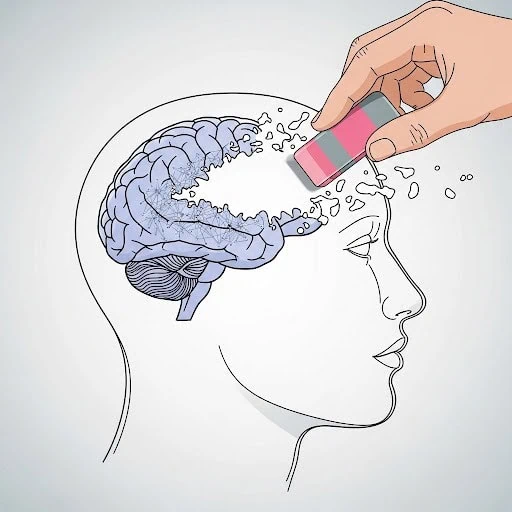
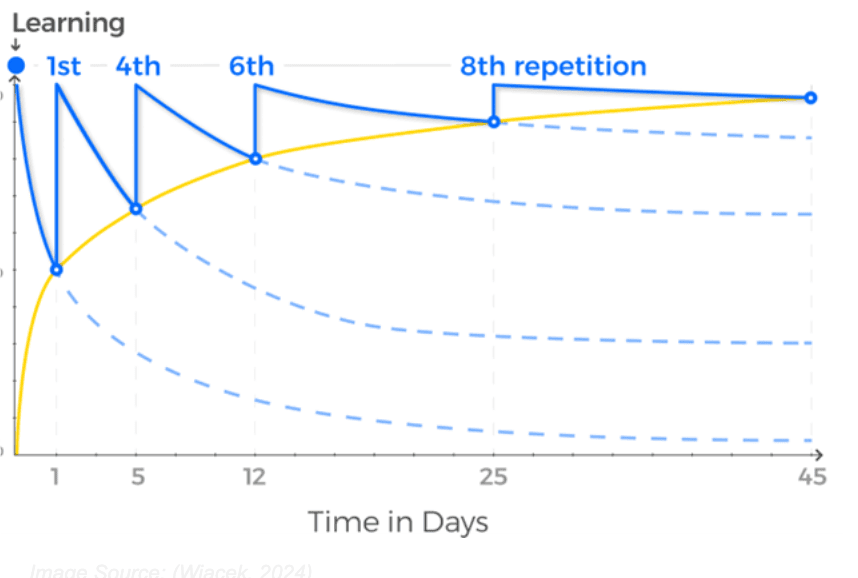
Even when consumers notice our ads, they forget. First charted by Hermann Ebbinghaus over 140 years ago, the Forgetting Curve shows just how steep the drop-off is—most new information is forgotten within days unless reinforced.
The Risk to Brands
Cutting through the clutter isn’t enough.
Ehrenberg-Bass research shows that buyers choose from brands they easily think of at the moment of need—this is mental availability.
If your brand doesn’t come to mind, it might as well not exist, no matter how good your product is. The Forgetting Curve confirms just how quickly brand memories fade if they’re not refreshed.
Binet & Field’s work tells us why: most marketing leans too heavily on short-term sales activation, which delivers quick bumps but fails to embed your brand into long-term memory. Without consistent brand building, your share of mind—and share of market—slips away.
Through repetition and review, we can improve the retention of information over time. The good news for advertisers is that Ebbinghaus found that there are at least four ways to improve memory (Wiącek, 2024).
✅ The Fix – Four Proven Ways to Stay Top of Mind:
1️⃣ Spaced Learning – Memory fades fastest after first exposure, but repetition at the right intervals dramatically improves recall. Each touchpoint slows memory decay and strengthens brand associations. Think of it as drip-feeding your brand into long-term memory rather than flooding it once and walking away. This isn’t an argument for high frequency impressions. Since most consumers are NOT in market today, it’s about having a consistent presence throughout the entire year.
2️⃣ Relevance – People are far more likely to remember messages that connect to them. For those in market, that may mean discounts for the products they’re searching for. For those out of market, that means connecting to their personal needs or anchoring the brand emotionally to the triggers that initiate their purchase cycle. This is where distinctive brand assets become invaluable—helping buyers recall and recognize you when the need arises.
3️⃣ Clarity – The brain loves simplicity. Campaigns with one strong, singular message outperform those crammed with multiple
claims. Reducing copy and eliminating competing visuals makes it easier for consumers to store and retrieve your brand in memory.
4️⃣ Emotion – Emotionally charged messages stick better than purely rational ones. Whether it’s joy, pride, or nostalgia, feelings help anchor your brand in memory. But beware—negative emotions like stress or anxiety can hinder recall, so choose your tone carefully.
References
Binet, L., & Field, P. (2013). The long and the short of it: Balancing short and long-term marketing strategies. Institute of Practitioners in Advertising.
Dawes, J. (2022, June 27). The 95:5 rule. John Dawes. https://johndawes.info/the-955-rule/
Romaniuk , J. (2022). (rep.). Category Entry Points In A B2B World. The B2B Institute. Retrieved from https://business.linkedin.com/marketing-solutions/b2b-institute/cep-in-b2b.
Wiącek, M. (2024, April 4). The forgetting curve: Hermann Ebbinghaus (1885). Taalhammer. https://www.taalhammer.com/the-forgetting-curve-hermann-ebbinghaus/