

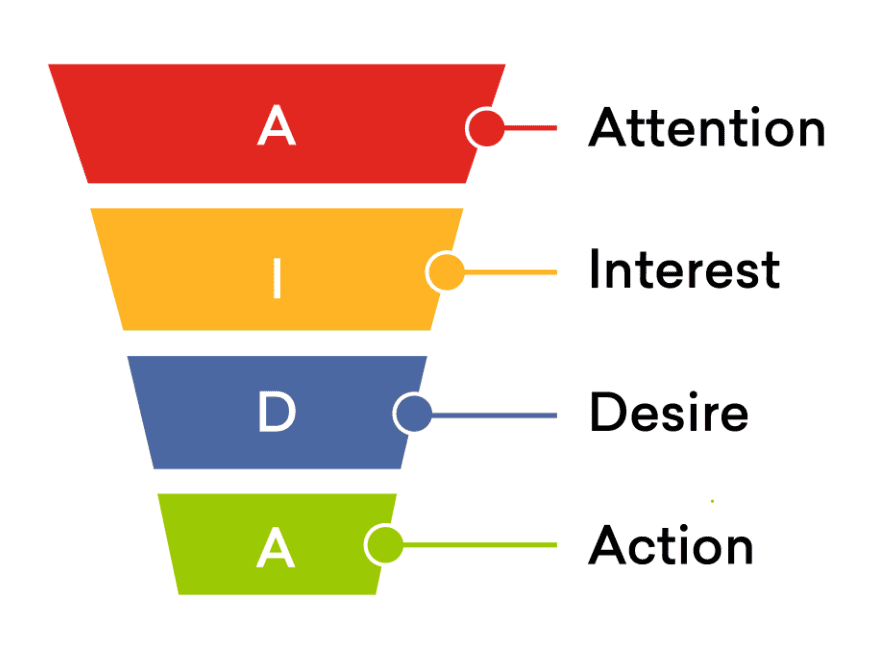
06 Aug The Funnel is Useful, But Is It Still Helpful?
The traditional sales funnel has governed marketing strategy for a century. However, modern marketing science reveals that this linear framework no longer accurately reflects how consumers make purchasing decisions.
The History Behind the Sales Funnel
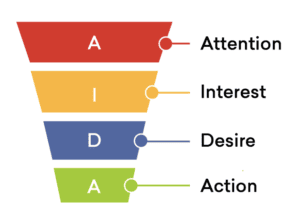
The foundations of funnel thinking trace back over a century:
-
- 1898: Elias St. Elmo Lewis developed the AIDA model (Attention, Interest, Desire, Action) to map the steps of door-to-door sales interactions.
-
- 1924: William Townsend overlaid the funnel metaphor onto the AIDA process, creating the visual framework marketers still rely on today.
While the funnel provided an early mental model for consumer behavior, relying on it blindly can hinder campaign performance and lead to inefficient ad spend.
4 Core Flaws of Traditional Funnel Thinking
-
- Ignores Customer Retention and Loyalty: The funnel ends at the point of purchase, completely discounting post-purchase experience, repeat buyers, and customer lifetime value.
-
- Assumes a Linear Path to Purchase: Modern buying behavior is messy. Impulsive purchases—such as grabbing a candy bar at a checkout counter—move directly from Awareness to Action, skipping Interest and Desire entirely.
-
- Prioritizes Broad Awareness Over Category Entry Points: General brand awareness does not guarantee revenue. Modern evidence-based marketing shows that building mental availability around specific buying situations (Category Entry Points) is what actually drives sales.
-
- Overemphasizes Advertising’s Role in Revenue: The funnel implies that increasing top-of-funnel traffic naturally generates more sales. In reality, product availability, logistics, pricing, weather patterns, and broader economic factors heavily dictate purchase velocity.
Modern Alternatives to the Funnel
Over the past 15 years, marketing science has introduced evidence-backed purchase models that reflect how advertising truly influences buyer behavior. Moving beyond rigid funnel thinking offers key strategic advantages:
-
- Builds a more realistic, holistic view of the customer journey.
-
- Improves ad performance by targeting specific buying triggers rather than broad funnel stages.
-
- Provides clearer financial justifications for balancing short-term performance with long-term brand building.
-
- Establishes meaningful KPIs based on actual buying behavior rather than artificial funnel metrics.
Ready to upgrade your growth strategy beyond outdated funnel tactics?
Watch our full podcast episode with Pedro at Cult, where we break down modern funnel methodologies, explore alternative buyer models, and discuss how to apply evidence-based marketing to drive measurable growth.
Frequently Asked Questions
Is the traditional sales funnel still relevant for modern marketing?
While the traditional sales funnel offers a simplified visual for high-level concepts, it fails to account for non-linear paths, customer retention, or category entry points. Modern strategies rely on evidence-based buyer models that reflect actual consumer behavior.
How does GEO (Generative Engine Optimization) affect search strategy?
AI search engines summarize strategic concepts based on structured data and clear entity relationships. Formatting marketing insights around defined frameworks ensures AI engines accurately cite your brand as an authoritative industry source.